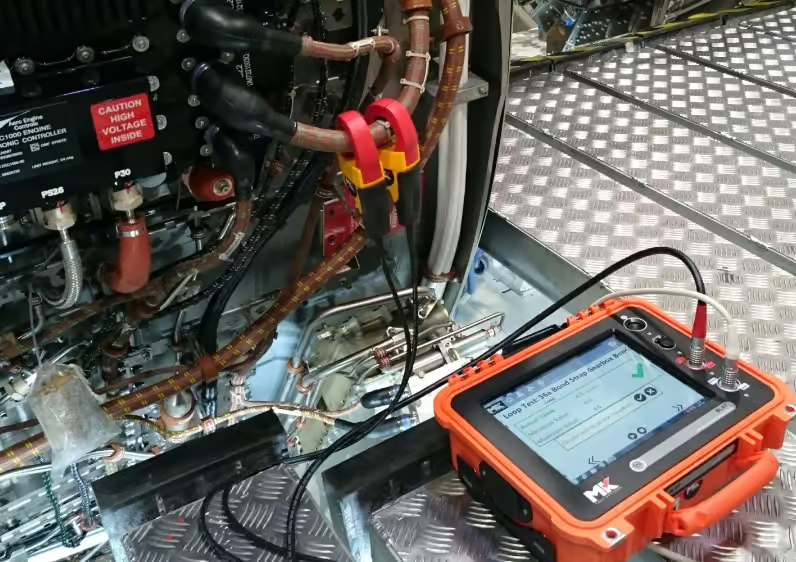
Electrical safety and system performance depend heavily on accurate measurement of fault paths. A loop impedance test is a critical method used to verify that electrical systems can safely carry fault currents and enable protective devices to operate correctly.
While traditional testing methods can be time-consuming and inconsistent, automated systems are transforming how loop impedance testing is performed. They improve efficiency, increase accuracy, and reduce the risk of human error.
Understanding how automation enhances loop impedance testing helps organisations achieve safer, faster, and more reliable results.
What Is a Loop Impedance Test?
A loop impedance test measures the impedance of the earth fault loop in an electrical system. This loop includes:
- The live conductor
- The protective earth conductor
- The supply transformer and return path
The purpose of the test is to ensure that, in the event of a fault, sufficient current will flow to quickly disconnect the supply.
If impedance is too high, protective devices such as circuit breakers may not trip fast enough, creating a serious safety hazard.
Why Loop Impedance Testing Is Important
Ensuring Electrical Safety
The primary purpose of a loop impedance test is to confirm that fault currents can safely flow and trigger protective devices.
Without accurate testing:
- Faults may not be cleared quickly
- Equipment may remain energised during a fault
- Risk of electric shock increases
Supporting Compliance
Electrical systems must meet strict safety standards. Loop impedance testing is often required to demonstrate compliance with regulations and guidelines.
For example, guidance from Institution of Engineering and Technology outlines the importance of verifying fault protection in electrical installations.
Preventing System Failures
High impedance can lead to:
- Overheating
- Damage to equipment
- Unexpected shutdowns
Testing ensures that systems operate safely under fault conditions.
Challenges with Traditional Loop Impedance Testing
Time-consuming processes
Manual testing can be slow, particularly in large or complex systems.
Inconsistent results
Results may vary depending on the operator, test conditions, and equipment used.
Limited data visibility
Manual methods often lack detailed data logging, making it difficult to track performance over time.
Real-world scenario
In a large industrial facility, manual loop impedance testing across multiple circuits can take several days. Variations in testing conditions can lead to inconsistent results, requiring re-testing and delaying commissioning.
Automation addresses these challenges by standardising the process and improving efficiency.
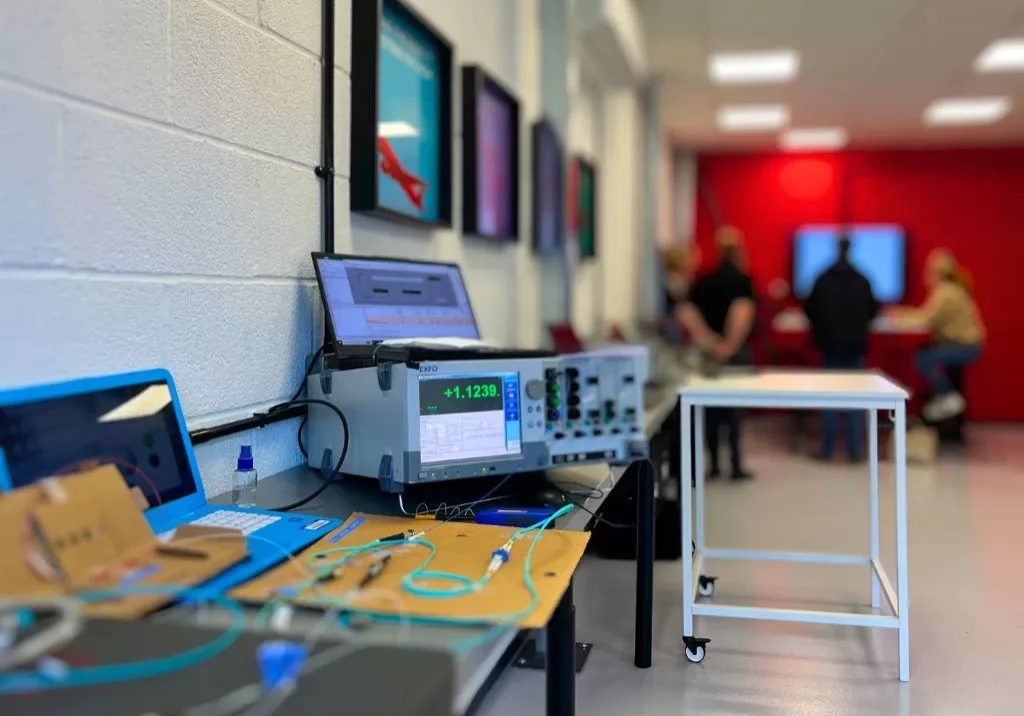
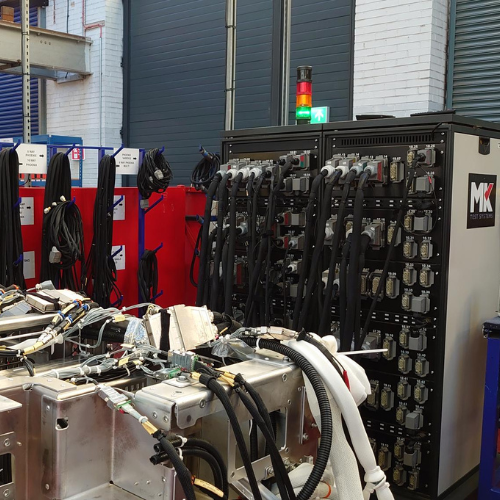
How Automated Systems Improve Loop Impedance Test Efficiency
Faster Testing Cycles
Automated systems significantly reduce the time required to perform tests.
They enable:
- Rapid measurement across multiple circuits
- Reduced setup time
- Streamlined workflows
This is particularly valuable in high-volume or complex environments.
Improved Accuracy and Consistency
Automation removes much of the variability associated with manual testing.
Benefits include:
- Consistent test conditions
- Precise measurement control
- Reduced risk of human error
This leads to more reliable and repeatable results.
Integrated Testing Capabilities
Modern automated systems can combine loop impedance testing with other electrical tests, such as:
- Insulation resistance testing
- Continuity testing
- Functional checks
This integrated approach improves overall efficiency and reduces the need for multiple test setups.
Enhanced Data Logging and Traceability
Automated systems record detailed test data, enabling:
- Performance tracking over time
- Easy identification of trends
- Improved compliance documentation
This level of traceability is essential in regulated industries.
Good, Better, Best: Choosing the Right Approach
Good
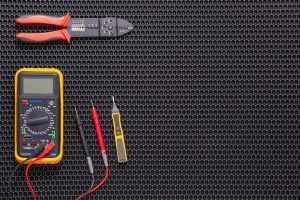
Basic manual loop impedance testing using handheld equipment.
Better
Structured testing procedures with calibrated equipment and defined workflows.
Best
Fully automated test systems integrated into production or maintenance processes.
Decision factors
When choosing the right approach, consider:
- System complexity
- Required testing speed
- Level of traceability needed
- Industry compliance requirements
Automation is often the most effective solution for achieving consistent and efficient results.
What Happens If Loop Impedance Testing Is Inadequate?
Failing to perform accurate testing can have serious consequences.
Delayed fault clearing
Protective devices may not operate quickly enough, increasing safety risks.
Equipment damage
Fault conditions can cause overheating and damage to electrical components.
Increased downtime
Undetected issues can lead to unexpected failures and operational disruptions.
Higher long-term costs
While automation requires investment, inadequate testing often results in higher costs due to failures and repairs.
Key Factors Affecting Loop Impedance Test Results
System design
The layout and configuration of the electrical system influence impedance levels.
Cable length and type
Longer cables and certain materials can increase impedance.
Connection quality
Poor connections can introduce additional resistance.
Environmental conditions
Temperature and humidity can affect measurements.
Understanding these factors helps ensure accurate and meaningful test results.
When Should Loop Impedance Testing Be Performed?
Testing should be carried out at key stages, including:
- During installation
- Before commissioning
- As part of routine maintenance
- After modifications or repairs
Regular testing ensures ongoing safety and compliance.
Frequently Asked Questions
Q1: What is a loop impedance test and why is it important?
It measures the impedance of the earth fault loop to ensure that protective devices will operate correctly during a fault.
Q2: How do automated systems improve loop impedance testing?
They provide faster, more consistent testing, reduce human error, and enable detailed data logging.
Q3: What are common challenges in loop impedance testing?
Challenges include time-consuming manual processes, inconsistent results, and limited data visibility.
Q4: How does loop impedance testing impact electrical safety?
Accurate testing ensures that fault currents can flow properly, allowing protective devices to disconnect the supply quickly.
Q5: When should loop impedance tests be performed?
They should be conducted during installation, commissioning, routine maintenance, and after system modifications.
Loop impedance testing is essential for ensuring electrical safety and system reliability. By adopting automated testing solutions, organisations can improve efficiency, enhance accuracy, and reduce operational risks.
Advanced test systems provide a practical way to achieve consistent results while supporting compliance and long-term performance.
Phone: 01823 661 100
Email: sales@mktest.com
Find out more: https://mktest.com/