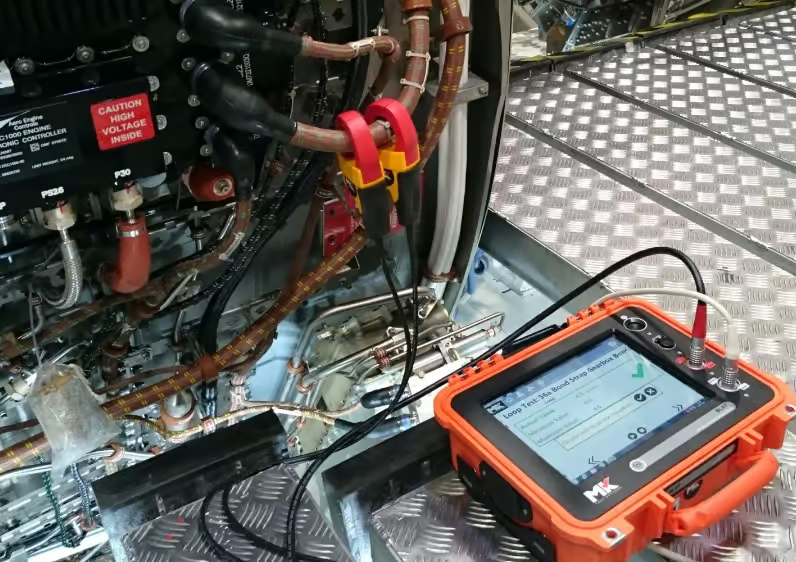
In modern electrical manufacturing, consistency and reliability are non-negotiable. Quality assurance testing is the process that ensures every product meets required standards before it reaches the end user.
From aerospace components to rail systems and industrial equipment, even minor defects can lead to serious consequences. This is why quality assurance testing is embedded throughout the manufacturing lifecycle rather than treated as a final inspection step.
Understanding how quality assurance testing works, and why it is critical, helps manufacturers improve performance, reduce costs, and maintain compliance in demanding industries.
What Is Quality Assurance Testing?
Quality assurance testing refers to a structured approach to verifying that products meet defined standards, specifications, and performance requirements.
In electrical manufacturing, this typically includes:
- Functional testing
- Continuity and connectivity checks
- Insulation resistance testing
- High voltage or dielectric testing
Rather than focusing on a single test, quality assurance testing combines multiple methods to ensure complete validation of a product.
Why Quality Assurance Testing Is Critical
Ensuring Product Reliability
Electrical systems must perform consistently over time. Even small defects can lead to failure under real-world conditions.
Quality assurance testing ensures that:
- All components function correctly
- Electrical connections are reliable
- Systems perform as expected under load
Meeting Industry Standards and Compliance
Industries such as aerospace and rail operate under strict regulatory requirements. Products must meet defined standards before they can be deployed.
Quality assurance testing supports compliance by:
- Verifying adherence to specifications
- Providing documented test results
- Supporting certification processes
For example, organisations often align testing processes with recognised frameworks such as International Electrotechnical Commission standards to ensure consistency and safety.
Reducing Defects and Rework
Detecting faults early in the manufacturing process is significantly more cost-effective than identifying them after deployment.
Real-world scenario
A manufacturer producing complex cable assemblies identifies a recurring insulation fault during quality assurance testing. By addressing the issue at the source, they prevent hundreds of defective units from reaching customers, avoiding costly recalls and reputational damage.
Improving Efficiency and ROI
While testing adds an upfront cost, it delivers long-term savings by:
- Reducing waste and scrap
- Minimising rework
- Preventing warranty claims
- Improving production efficiency
Quality assurance testing is not just about quality. It is about achieving measurable return on investment.
Common Issues Found During Quality Assurance Testing
Incorrect wiring or connections
Miswiring is a common issue, particularly in complex assemblies.
Insulation faults
Damaged or degraded insulation can lead to leakage currents and safety risks.
Component defects
Faulty components can compromise the entire system.
Assembly errors
Incorrect assembly processes can introduce hidden defects that only become apparent under testing.
Identifying these issues early ensures that only compliant products move forward in the production process.
Manual vs Automated Quality Assurance Testing
Manual testing
Manual methods are suitable for smaller production runs or simple systems. However, they can be limited by:
- Operator variability
- Slower testing speeds
- Increased risk of human error
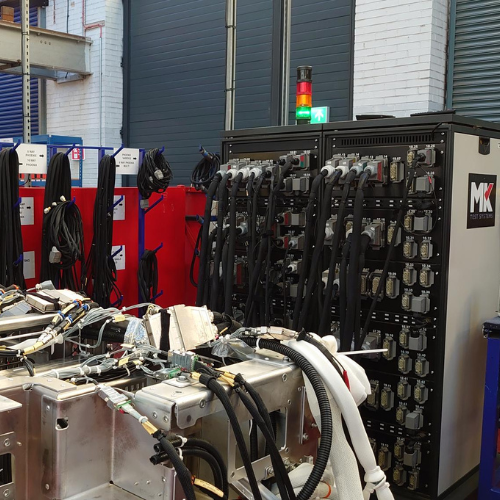
Automated testing systems
Automation provides a more advanced approach to quality assurance testing.
Key advantages
- Consistent and repeatable testing
- Faster throughput
- Integration of multiple test types
- Data logging and traceability
Automated systems are particularly valuable in high-volume or high-reliability environments.
Good, better, best approach
- Good: Basic manual inspection and testing
- Better: Structured testing procedures with partial automation
- Best: Fully automated quality assurance testing integrated into production
The more integrated the testing process, the more efficient and reliable the outcome.
What Happens If Quality Assurance Testing Is Inadequate?
Reducing or skipping quality assurance testing can lead to significant risks.
Increased failure rates
Undetected defects result in higher failure rates in the field.
Safety risks
Faulty electrical systems can pose serious hazards, particularly in high-power or critical applications.
Higher long-term costs
While testing requires investment, inadequate testing often leads to greater costs through repairs, recalls, and downtime.
Loss of customer trust
Consistent quality issues can damage reputation and reduce future business opportunities.
Key Factors That Influence Quality Assurance Testing Effectiveness
Test coverage
Comprehensive testing ensures that all aspects of a product are verified.
Test accuracy
Accurate measurements are essential for reliable results.
Data traceability
Recording test data allows manufacturers to track performance and identify trends.
Integration with production processes
Embedding testing into the production line improves efficiency and reduces bottlenecks.
Decision-Making: When to Upgrade Your QA Testing Approach
If your current process is not delivering consistent results, it may be time to upgrade.
Signs you need improvement
- High defect rates
- Frequent rework
- Lack of test data
- Inconsistent product performance
Benefits of upgrading
- Improved product reliability
- Reduced operational costs
- Faster production cycles
- Enhanced compliance
Investing in advanced quality assurance testing systems can deliver both short-term and long-term benefits.
Frequently Asked Questions
Q1: What is quality assurance testing in electrical manufacturing?
It is a structured process of testing electrical products to ensure they meet defined standards, specifications, and performance requirements.
Q2: How does quality assurance testing improve product reliability?
It identifies defects early, ensuring that only fully functional and compliant products are delivered.
Q3: What are the most common defects found during QA testing?
Common defects include incorrect wiring, insulation faults, component failures, and assembly errors.
Q4: How can automated QA testing reduce costs?
Automation improves efficiency, reduces errors, and minimises rework, leading to lower overall costs.
Q5: What happens if quality assurance testing is inadequate?
Inadequate testing can lead to system failures, safety risks, increased costs, and damage to reputation.
Quality assurance testing is a critical component of electrical manufacturing. It ensures that products meet the highest standards of safety, reliability, and performance.
By adopting advanced testing strategies and integrating automation, manufacturers can improve efficiency, reduce risk, and achieve consistent results across complex applications.
Phone: 01823 661 100
Email: sales@mktest.com
Find out more: https://mktest.com/